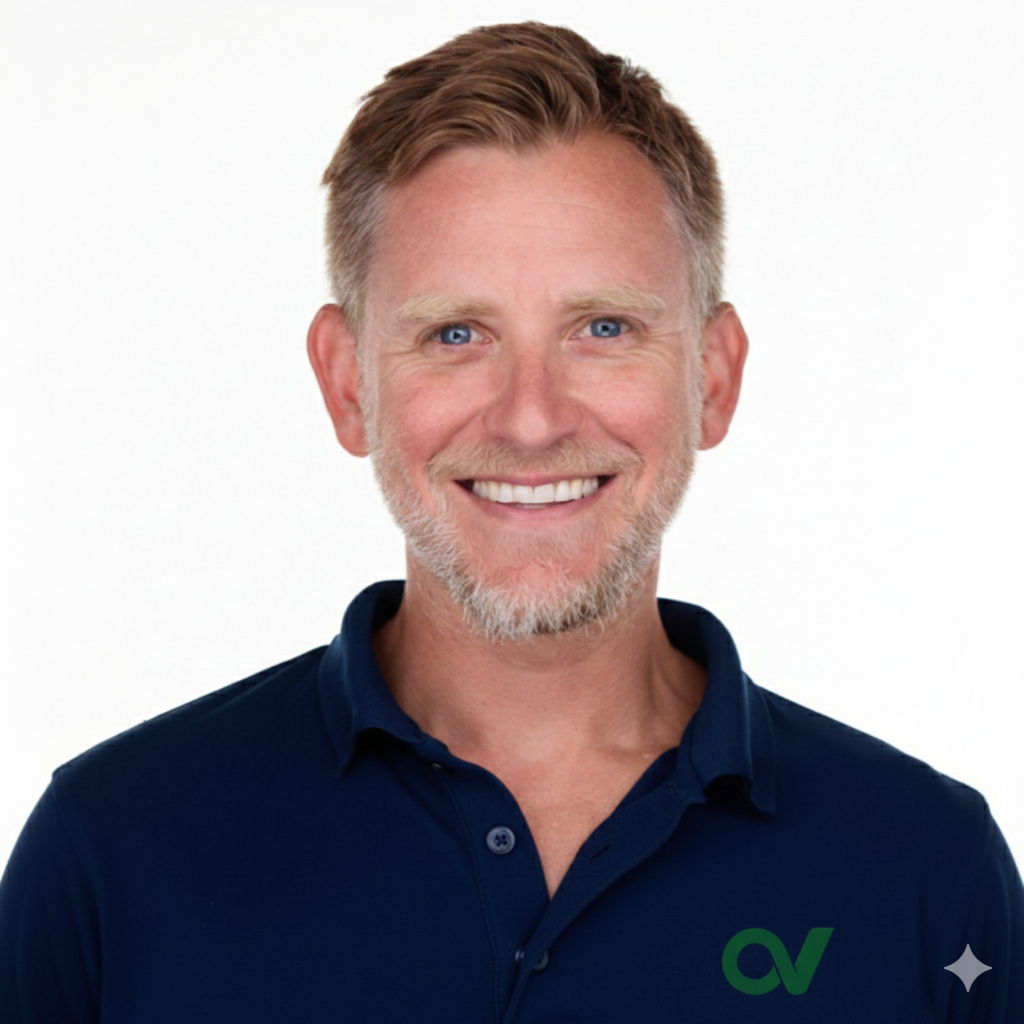
Most veterinarians spend their careers mastering the clinic. Dr. Andrew Heller spent his building the standards that allow clinics to scale. As a co-founder and former Chief Medical Officer at IndeVets, Andrew was one of the few clinicians to develop medical protocols for a national platform from the ground up.
Today, as Co-Founder and COO of OpenVet, he is moving from scaling workforces to scaling intelligence. His role is to act as the translator between clinical reality and system design—ensuring that as AI enters the exam room, it upholds medical rigor rather than diluting it.
We sat down with Andrew to discuss the shift from managing decline to extending healthspan, why "black-box" medicine fails the trust test, and the specific cases that still haunt him.
We asked him seven questions. Here is what he said.
1. What’s a clinical moment early in your career that still shapes how you practice today?
There are many clinical moments that have shaped how I practice, but one of the biggest lessons I learned early in my career was that doing the technically correct thing is not enough if you are not also seeing the whole patient, the family, and the context of the case.
As a younger veterinarian, I was very focused on getting the medicine right, which, of course, matters. But over time, I realized that communication, judgment, and timing matter just as much. I remember multiple cases where I was asked for a second opinion. The medicine itself was solid, but the outcome still felt incomplete because the client did not fully understand the plan, the risks, or the reasoning behind it. Taking the time to explain those things was often worth more to the client than anything else. Educating clients is so important, but make sure to read the room, use terms they can understand, and slow down, or you’ll get the opposite effect.
That stuck with me. I still care deeply about being thorough and medically sound, but I also work hard to ensure owners understand what matters most, what is urgent versus optional, and what the realistic path forward is.
2. There’s a growing conversation about whether veterinary medicine should shift from managing decline to actively extending healthspan. Where do you stand on that, and how does it show up in your work?
Historically, we have spent a lot of time reacting to disease after it has already advanced, and while that will always be part of the job, I think the bigger opportunity is to preserve quality of life earlier and for longer.
Healthspan means more than simply adding years. It means more comfortable, more functional years, and more time when a pet is truly thriving. In my own work, dental health has become a major part of that conversation. Many people still view dentistry as cosmetic or optional, but untreated periodontal disease causes chronic pain and can have broader systemic consequences. Addressing it proactively is absolutely a healthspan issue.
There is not a week that goes by without hearing that a patient is doing better, acting younger, or thriving after receiving proper dental care. That is why I believe this shift matters. It is not just about managing decline better. It is about helping our patients live better for longer.
3. The number one concern veterinarians raise about AI isn’t accuracy—it’s trust. They want to see the reasoning and verify it themselves. Why do you think that matters so much in this profession?
Being a veterinarian comes with the privilege of public trust. People place their trust in us, and with that trust comes the responsibility to practice evidence-based medicine.
We are not just looking for an answer. We want to know why that answer makes sense, what evidence supports it, what assumptions underlie it, and where the risks lie. In our profession, a recommendation can directly affect an animal’s comfort, safety, and survival, as well as a client’s emotional and financial reality. That is too important for black-box medicine that does not reveal its reasoning.
We are trained to build differentials, compare options, assess risk, and defend our plan. AI becomes far more useful when it supports that process rather than trying to replace it. If a tool helps us think better, faster, and with more confidence, that is powerful. But if it asks us to trust it blindly, adoption will always be limited.
4. In your specialty, can you describe a scenario where the difference between species could turn a safe recommendation into a dangerous one?
Absolutely. In veterinary dentistry, one of the fastest ways to get into trouble is to assume that oral disease behaves the same way across species. It is similar in some respects, but the differences matter.
Consider a painful, diseased tooth. In a dog, we may be dealing primarily with periodontal disease and bone loss. In a cat, the same presentation may be tooth resorption, a very different disease process that is often more painful than people realize. If we apply a dog framework to a cat, we risk misunderstanding the pathology, underestimating pain, and choosing the wrong treatment plan.
Anesthesia, regional nerve blocks, extraction techniques, and postoperative expectations can also vary meaningfully by species.
That is why species-aware medicine matters so much. In dentistry, we are not just treating teeth. We are treating species-specific anatomy, disease patterns, pain expression, and healing responses. The moment we stop respecting those differences, a recommendation that sounds safe can no longer be safe.
5. There’s a tension between AI that simply delivers information and AI that acts as a clinical partner - offering judgment, not just data. Where should that line be?
AI should serve as a clinical partner, not a clinical replacement. It should help organize our thinking, surface relevant information, surface possibilities, and sharpen decision-making, while we remain the final interpreter and decision-maker.
A strong AI partner should help us move faster toward a sound plan and present information in a way that is genuinely useful in practice. At its best, it gives us something close to superpowers. It should make good clinicians better. In my mind, the best systems respect the clinician’s role while meaningfully expanding mental bandwidth.
6. Is there one patient - one specific animal - that changed how you think about what you do?
It is not a single patient, but rather a few painful cases early on that taught me lessons I still carry. The ones that stay with me most are not my victories. They are my mistakes.
I have had cases where, in hindsight, I wish I had pursued a simpler or less expensive treatment option before resorting to euthanasia. I have had dental cases where I closed extraction sites under excessive tension and learned the hard way that tissue handling and surgical judgment matter just as much as technical execution. I have also taken on cases beyond my skill set at the time, wanting to help, and the outcome was not what it should have been.
Those experiences were painful, but they made me better. They taught me to slow down, respect the basics, stay humble, know my limits, and think more carefully about what the patient in front of me truly needs. They also made me more honest with clients and with myself. Some of the most important growth in our profession comes not from the cases that go perfectly, but from the ones we replay in our heads and vow to learn from.
7. When you think about building better clinical intelligence for all species on earth - not just the ones we see most often - what feels most urgent to you?
What feels most urgent to me is that veterinary medicine is asking a shrinking pool of people to carry an enormous burden. We are short on veterinarians, the work is hard, and I have seen firsthand how that strain can wear people down and even push them out of the profession. While that is clear in small animal medicine, the need may be even greater in wildlife, exotics, food animal, and other less common areas of care, where support is harder to find.
That is where better clinical intelligence can make a real difference. If OpenVet can provide trustworthy, species-aware support when we need it, it can help improve outcomes, reduce avoidable mistakes, and give us more confidence, clarity, and speed, especially when we are treating a species we do not see every day.
Even helping to offer a "spectrum of care" can help countless animals in need. It will not replace experience or expertise, but it can help us practice better medicine across all veterinary disciplines.
About OpenVet
OpenVet is building the foundational medical intelligence infrastructure for animal health. The company decodes species complexity, fragmented evidence, and real-world clinical risk into a single computable medical framework. Its mission is to equip every veterinarian with the world’s best intelligence, empowering them to practice at the absolute limit of their potential.
As Co-Founder and Chief Operating Officer, Dr. Heller is responsible for translating clinical reality into system design, protecting medical rigor as the platform scales and ensuring that adoption raises professional standards rather than working around them. In his previous role, he helped scale IndeVets to more than 250 veterinarians and over 4,000 hospital partners.
Try OpenVet For Yourself
If you're a licensed veterinarian, access is free. No trial period, no credit card, no sales call. OpenVet.ai